

Oxford Economics points out that recent developments have overturned its baseline scenario.
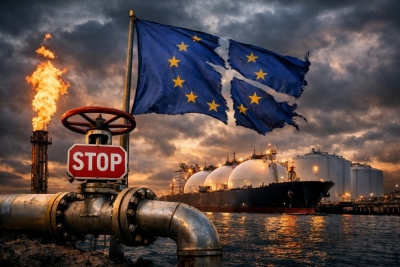
The countdown has begun for the energy crisis that will hit Europe in the winter of 2027, as the new crisis in Hormuz places a bomb under energy security. Although the Eurozone economy shows a better-than-expected picture in the second quarter of 2026, the new geopolitical crisis in the Middle East and turmoil in energy markets create serious risks for growth and inflation in the coming months, according to an analysis by Oxford Economics.
Industry held resilient despite the crisis
The Eurozone's industrial production for May was negatively affected by sharp fluctuations in Ireland's data. Excluding Ireland, industrial production increased by 0.3% on a monthly basis, suggesting that manufacturing remained resilient despite the US-Iran conflict and its impact on international markets. The biggest boost was given by energy-intensive sectors, such as refineries, the chemical industry, plastics, and rubber, while the increasing demand linked to the development of artificial intelligence is also estimated to have made a positive contribution.
Temporary upward revision for second-quarter GDP
Available data reinforce the estimate that Eurozone growth in the second quarter may exceed Oxford Economics' forecast of a 0.2% quarterly increase. Eurostat's first estimate, to be published in late July, could show growth of up to 0.4%, as both industrial resilience and the strengthening of private consumption, due to previously lower energy prices, supported economic activity. However, analysts estimate that much of this improvement is temporary and due to inventory building by businesses and a temporary boost in competitiveness against Asian producers. Indicators in Germany already show that this economic momentum is beginning to fade.
New escalation in the Middle East overturns scenarios
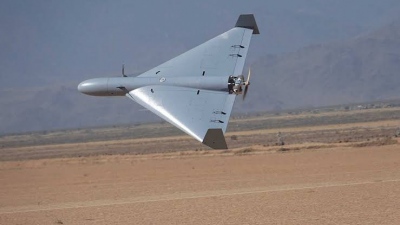
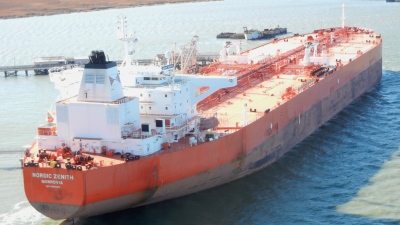
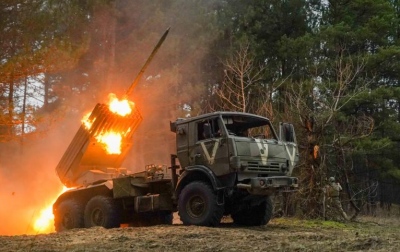
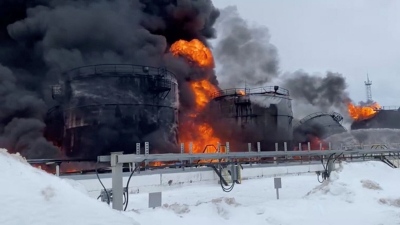
Oxford Economics points out that recent developments have overturned its baseline scenario. US President Donald Trump announced the termination of the ceasefire with Iran, resulting in the resumption of hostilities and the effective closure of the Strait of Hormuz, through which a significant portion of the global oil trade passes. At the same time, Ukrainian drone attacks on Russian refineries caused fuel shortages in Russia, leading Moscow to ban diesel exports, which further restricted global supply. Concurrently, Houthi rebels launched missile attacks against Saudi energy infrastructure used as an alternative route to the Strait, demonstrating, according to Oxford Economics, that there is no safe solution to bypass this specific maritime passage.
Rise in oil and natural gas prices
Oxford Economics estimates that it will revise its forecasts upward for the price of Brent and European natural gas in the coming months. This development is expected to boost inflation and weigh on economic growth, although for now, it is not considered sufficient to lead to a significant change in fiscal or monetary policy. The impact will depend primarily on the duration of the disruption in energy flows and on whether alternative supply sources remain active.
The ECB remains in a wait-and-see stance
The European Central Bank is expected to keep interest rates unchanged at its upcoming meeting, readopting its familiar "meeting-by-meeting" decision-making approach based on incoming economic data. Although new developments in energy prices increase the risk of higher inflation, Oxford Economics believes that the ECB will not take immediate policy action, though its rhetoric may turn more hawkish as long as energy pressures persist.
Focus on confidence indicators and PMIs
Next week, markets will closely monitor the ZEW economic sentiment indicator for Germany and the Eurozone, the ECB's bank lending survey, as well as the preliminary July PMI data. However, Oxford Economics points out that most responses to these surveys were collected before the latest escalation in the Middle East, meaning that the actual deterioration in economic sentiment may be more fully reflected in the final readings to be published in early August.
www.bankingnews.gr





Σχόλια αναγνωστών